
Anxiety doesn’t always arrive loudly. Sometimes it slips in quietly while you’re lying in bed at night, heart racing, mind spinning, body tense for no clear reason. You may start searching for anything that promises fast relief. That’s when many people wonder, “Does Benadryl help with anxiety?”
Benadryl is easy to get. No prescription. No appointment. Just a pharmacy shelf away. And since it makes people sleepy, some assume it must calm anxiety too. But sedation and healing are not the same thing.
In 2026, mental health awareness is stronger than ever. With teletherapy, mindfulness apps, and evidence-based treatment becoming mainstream, it’s more important than ever to understand what actually helps anxiety and what only masks it.
Causes & Triggers of Anxiety
Emotional Triggers
• Fear of failure
• Trauma or past experiences
• Relationship stress
• Low self-worth
Physical Triggers
• Caffeine
• Sleep deprivation
• Blood sugar swings
• Hormonal changes
Environmental Triggers
• Work pressure
• Social overload
• Financial stress
• Post-pandemic uncertainty
As shared by Dr. Safir Azam, MD, psychiatrist specializing in anxiety, depression, anger, and stress-related disorders, anxiety is often your nervous system staying in survival mode too long.
Common Symptoms of Anxiety
Mental Symptoms
• Racing thoughts
• Overthinking
• Catastrophic thinking
Physical Symptoms
• Chest tightness
• Shortness of breath
• Nausea
• Trembling
Emotional Symptoms
• Fear
• Irritability
• Feeling overwhelmed
What Is Benadryl and How It Works
What Benadryl Is
Benadryl (diphenhydramine) is an antihistamine for allergies.
What It Does in the Brain
It blocks histamine but also slows the central nervous system.
Why It Makes You Sleepy
It causes sedation, not emotional regulation.
Can Benadryl Calm Anxiety? What Science Actually Says
If you’re desperate for relief, it makes sense to reach for what’s close. But here’s the truth:
Benadryl does not treat anxiety. It only sedates you.
As shared by Dr. Safir Azam, MD, sedation is not the same as emotional healing. Anxiety lives in your nervous system, not your eyelids.
Benadryl does not:
- Retrain anxious thinking
- Heal trauma
- Teach your body safety
Does Benadryl Work for Anxiety or Just Make You Sleepy?
Why It Feels Like Calm
Because drowsiness masks distress.
What It Actually Does
It shuts down alertness, not fear.
Why Anxiety Comes Back
Your brain’s threat system is untouched.
Does Benadryl Help with Anxiety?
The Short Answer
It may make you sleepy, but it does not treat anxiety.
Why People Feel “Calm”
Sedation feels like calm, but your anxiety circuits are untouched.
What It Does Not Do
• It doesn’t regulate fear
• It doesn’t heal trauma
• It doesn’t retrain anxious thinking
As shared by Dr. Safir Azam, MD, sedation is not the same as emotional healing.
Benadryl for Anxiety,Myths vs Facts
| Myth | Fact |
| Benadryl treats anxiety | It only sedates |
| It’s safe for panic attacks | It can worsen them |
| OTC means harmless | Many side effects exist |
| Sleep = anxiety relief | Not true |
Is Taking Benadryl for Anxiety Safe? Risks You Should Know
Physical Risks
• Rapid heart rate
• Dizziness
• Confusion
Mental Risks
• Increased anxiety
• Panic-like symptoms
• Emotional blunting
Long-Term Risks
• Dependence on sedation
• Brain fog
• Poor emotional regulation
Practical Coping Strategies That Actually Work
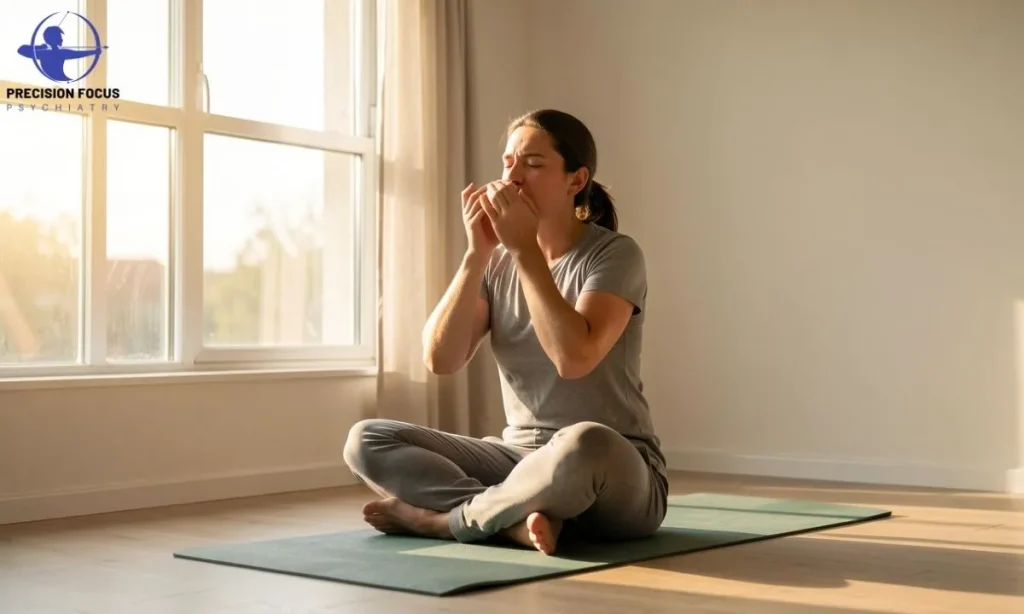
1. Nervous System Regulation
• Deep breathing
• Cold water splash
• Slow movement
Examples:
• Sarah calms panic by breathing 4-7-8 at night.
• Ali uses ice packs on wrists to ground himself.
2. CBT Techniques
• Challenge negative thoughts
• Replace with realistic ones
Examples:
• Maria writes her fears and questions them.
• Omar reframes “I’m failing” to “I’m learning.”
3. Self-Compassion
• Speak kindly to yourself
• Stop self-attacking thoughts
Daily Habits That Calm the Nervous System
Morning Routine
• Sunlight
• Protein
• Movement
Midday Reset
• Walk breaks
• Water
• Slow breathing
Night Routine
• No screens 1 hour before bed
• Stretching
• Gratitude journaling
How Therapy & Medication Fit In
Therapy
CBT, trauma therapy, and mindfulness-based therapy retrain the fear system.
Medication
• SSRIs
• Buspirone
• SNRIs
As shared by Dr. Safir Azam, MD, medication supports healing but doesn’t replace emotional work.
Lifestyle Changes That Reduce Anxiety Long-Term

Nutrition
• Balanced meals
• Less caffeine
Movement
• Walking
• Yoga
• Strength training
Digital Hygiene
• Less doom-scrolling
• More real-life connection
Building Emotional Resilience
Emotional Skills
• Boundaries
• Self-respect
• Emotional expression
Mental Flexibility
• Letting go of control
• Accepting uncertainty
Real-Life Case Examples
Case 1:
A 32-year-old teacher used Benadryl nightly. Anxiety worsened. After CBT + medication, she sleeps naturally again.
Case 2:
A college student had panic attacks after Benadryl. Therapy + breathwork changed everything.
When to Seek Professional Help

• Anxiety lasts more than 3 months
• It affects sleep, work, or relationships
• You feel stuck
As shared by Dr. Safir Azam, MD, early support prevents long-term suffering.
Frequently Asked Questions
Can Benadryl help anxiety at night?
It may make you sleepy, but it doesn’t treat anxiety.
Can Benadryl cause panic attacks?
Yes. Side effects can mimic panic symptoms.
Is Benadryl safe for stress?
No. It’s not designed for mental health care.
What’s better than Benadryl for anxiety?
Therapy, CBT, medication, and nervous system regulation.
Does Benadryl help long-term anxiety?
No. It only sedates temporarily.
What’s the safest anxiety treatment?
Professional care + healthy coping strategies.
Conclusion
Anxiety doesn’t mean you’re weak. It means your nervous system is overwhelmed and asking for support. Benadryl might knock you out, but it won’t heal you. Real healing comes from understanding your mind, regulating your body, and getting the right guidance.
Ready to take the next step toward peace? Book a consultation with Dr. Safir Azam, MD – Empowering Minds, Transforming Lives.
Visit precisionfocuspsychiatry.comIf you’re ready to move from surviving to thriving, schedule a session with Dr. Safir Azam at precisionfocuspsychiatry.com – where healing begins with understanding.